Source Self Drilling Phillips Screws for HVAC, Metal Roofing, and Steel Framing
Find 30 self drilling phillips screws from Chinese manufacturers. Compare brass, stainless steel, and carbon steel options with various head styles and finishes. Source custom lengths and thread sizes for industrial applications; compare the available evidence and request quotations based on your requirements.
Key considerations
Products List





Comprehensive Sourcing Guide
Self Drilling Phillips Screws Sourcing Guide
Procuring self-drilling Phillips screws requires a nuanced understanding of their dual-function design, which combines drilling and tapping capabilities in a single fastener. These components are essential for joining metal sheets without pre-drilling, significantly reducing assembly time and labor costs in construction and manufacturing. Buyers must distinguish between standard Phillips drive types and security variants, as the latter offer anti-theft properties for sensitive infrastructure. The market offers a wide array of materials, including stainless steel, carbon steel, and brass, each suited to different environmental conditions and load requirements.
The sourcing landscape is dominated by manufacturers in Guangdong and Hebei, China, who provide extensive customization options for thread size, length, and head style. Listings indicate a broad range of available specifications, from M2 to M10 thread sizes and lengths up to 500mm, catering to diverse industrial needs. However, the presence of "Security Anti Theft" labels alongside standard tapping and self-drilling types suggests a mixed inventory. Buyers should carefully verify whether the specific Phillips drive configuration meets their torque requirements and compatibility with existing power tools, ensuring that the selected screw type aligns with the structural integrity demands of the project.
Product Scope and Observed Listing Signals
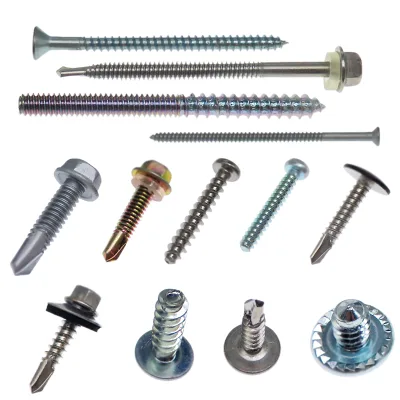
The observed product listings reveal a complex inventory structure that blends standard fasteners with specialized security hardware. Key attributes include a variety of head styles such as pan, truss, flat, oval, hex, and binding, alongside specific models like DIN7504 and Din7504P. These models often feature hexagon or cross grooves, indicating a focus on high-torque applications where standard Phillips drives might slip. The presence of "Safety Anti Theft Security Screws" alongside standard self-drilling types suggests that suppliers offer modular solutions, allowing buyers to select between standard Phillips drives for general use and security-focused designs for high-risk installations.
Material diversity is another critical signal, with listings citing stainless steel, carbon steel, brass, aluminum, and plastic options. This variety supports applications ranging from corrosive marine environments to lightweight structural assemblies. Surface finishes are equally varied, including zinc plating, black oxide, cadmium plating, and zinc-aluminum coatings, which directly impact corrosion resistance and aesthetic requirements. Buyers must cross-reference these material and finish options with the specific environmental conditions of their end-use, as the listed "Grade" is often customizable, requiring explicit confirmation of mechanical properties like tensile strength and hardness for critical structural joints.
Technical Specifications to Verify
Verifying technical specifications is paramount when sourcing self-drilling screws, particularly regarding thread pitch and drill point geometry. The listings mention fine thread types and metric measurement systems, with standard sizes ranging from M2 to M10. Buyers must confirm the exact thread pitch, as coarse and fine threads offer different holding strengths and vibration resistance. Additionally, the drill point classification, often denoted by numbers like 1 through 6, determines the thickness of metal the screw can penetrate. Since the "Grade" is listed as customizable, buyers should request detailed material certificates that specify the steel grade, heat treatment process, and resulting hardness values to ensure the screw can withstand the drilling torque without breaking.
Head style and drive compatibility are equally critical for assembly efficiency. While the core keyword specifies Phillips screws, the listings highlight round, pan, truss, and hex heads, some with flanges. Buyers must ensure the Phillips drive depth and profile match their automated or manual driving tools to prevent cam-out, which can damage the screw head and compromise the joint. Furthermore, the length range of 1mm to 500mm offers flexibility, but precise length selection is necessary to ensure adequate thread engagement without protruding through the material. Confirming the single package dimensions and gross weight helps in planning logistics and storage, especially for large-volume orders where palletization and carton packing efficiency impact overall supply chain costs.
Compliance and Safety Documentation
Compliance documentation serves as the primary verification tool for material safety and manufacturing quality. The listings explicitly mention ISO9001:2015 and RoHS certifications, indicating adherence to international quality management and hazardous substance restriction standards. Buyers should request valid, up-to-date copies of these certificates to verify that the supplier’s production facilities meet these rigorous benchmarks. RoHS compliance is particularly important for electronics and consumer goods, ensuring that the screws do not contain restricted lead, mercury, or cadmium levels, although some listings mention cadmium plating, which may conflict with RoHS unless specifically exempted or applied to non-RoHS regulated products.
Standardization compliance is another vital aspect, with listings referencing GOST, GB, DIN, ANSI, BSW, and JIS standards. Buyers must identify which standard applies to their specific market and project requirements, as mechanical properties and dimensional tolerances vary significantly between regions. For instance, DIN standards are prevalent in European manufacturing, while ANSI is common in North America. It is crucial to verify that the physical dimensions and mechanical performance of the supplied screws align with the chosen standard. Additionally, buyers should inquire about any industry-specific certifications, such as those for automotive or aerospace applications, which may require additional testing and documentation beyond general ISO and RoHS compliance.
Cost Drivers and Commercial Terms
Cost structures for self-drilling screws are influenced by material prices, surface treatment complexity, and order volume. The observed price range of $0.01 to $1.20 per unit reflects significant variation based on material grade, length, and finish. Stainless steel and specialized alloys command higher prices than carbon steel, while complex surface treatments like zinc-aluminum or chrome plating add to the cost. Buyers should analyze the total cost of ownership, considering that higher-quality screws may reduce assembly errors and long-term maintenance costs, despite a higher initial unit price. The minimum order quantity (MOQ) ranges from 1 piece to 100,000 pieces, allowing for flexible procurement strategies, from small prototype runs to large-scale production orders.
Commercial terms and payment structures also impact the overall procurement cost. Listings indicate FOB pricing and payment terms such as 30% TT in advance and 70% TT before shipment. These terms require careful cash flow management and risk assessment, particularly for new supplier relationships. Delivery times vary between 5-7 working days for in-stock items and 15-25 days for customized orders, which affects inventory planning and project timelines. Buyers should negotiate clear terms for sample provision, as samples are listed as available, allowing for quality verification before committing to large orders. Understanding these commercial dynamics helps in budgeting accurately and avoiding unexpected costs related to expedited shipping or rework due to specification mismatches.
Supplier Qualification and Quality Control
Supplier qualification involves assessing the manufacturer’s capability to deliver consistent quality and meet customization requests. The listings highlight OEM and ODM services, indicating that suppliers can tailor screws to specific client needs, including custom lengths, thread sizes, and head styles. Buyers should verify the supplier’s manufacturing capacity and quality control processes, such as in-line inspection and final random inspection protocols. Given the "High-Quality" claim, it is essential to request detailed quality assurance plans that outline how defects are identified and corrected. Suppliers located in Guangdong and Hebei offer proximity to supply chains, but buyers should conduct on-site audits or third-party inspections to verify production capabilities and ethical labor practices.
Quality control extends to the verification of material properties and surface finish durability. Buyers should implement incoming quality control checks, testing for tensile strength, hardness, and corrosion resistance using salt spray tests. The variety of surface finishes, from plain to zinc-plated and black oxide, requires specific testing protocols to ensure adequate protection against environmental factors. Additionally, verifying the consistency of the Phillips drive geometry is crucial to prevent assembly issues. Establishing a clear communication channel for technical support, such as the listed 24-hour online service, can facilitate rapid resolution of quality disputes. Building a robust supplier qualification process ensures that the sourced screws meet the rigorous demands of the end application, minimizing the risk of field failures.
Long-Term Procurement Checks
Long-term procurement success depends on establishing continuous performance monitoring and supplier relationship management. Buyers should track key performance indicators such as on-time delivery rates, defect rates, and responsiveness to technical queries. Regular audits and performance reviews help identify potential issues early, allowing for corrective actions before they impact production. The availability of customization services suggests that suppliers can adapt to changing project requirements, but buyers must ensure that these changes are managed through formal change control processes to maintain consistency and quality. Building a diversified supplier base can mitigate risks associated with single-source dependencies, ensuring supply chain resilience.
Sustainability and regulatory compliance are increasingly important factors in long-term procurement strategies. Buyers should monitor changes in environmental regulations, such as RoHS updates or REACH restrictions, and ensure that suppliers remain compliant. The ability of suppliers to provide updated certification documents and material safety data sheets is crucial for maintaining compliance in global markets. Additionally, exploring opportunities for cost optimization through volume consolidation or long-term contracts can improve profitability. By maintaining a proactive approach to supplier management and quality control, buyers can secure a reliable supply of high-quality self-drilling screws, supporting the success of their manufacturing and construction projects over the long term.
FAQs
What materials are available for these security screws?
These screws are available in brass, stainless steel, steel, aluminium, and plastic. The material selection depends on the specific application requirements and environmental conditions. Stainless steel offers high corrosion resistance, while steel provides strength. Custom grades are also supported to meet precise engineering needs for various industries.
Can I customize the thread size and length?
Yes, customization is available for both thread size and length. Thread sizes range from M2 to M10, and lengths can be specified from 1mm to 500mm. The manufacturer supports OEM and ODM services, allowing buyers to request specific dimensions that fit their unique assembly requirements and design specifications.
What certifications do these products hold?
The products hold ISO9001:2015 and RoHs certifications. These certifications ensure adherence to international quality management standards and environmental safety regulations. Buyers can rely on these credentials for compliance in regulated markets. The manufacturer maintains these standards across production to guarantee consistent quality and safety for all supplied components.
What is the minimum order quantity for stock items?
The minimum order quantity for stock items is one piece. This allows buyers to test samples or order small quantities without a high barrier. For customized orders, the MOQ is 30,000 pieces. This structure supports both trial orders and large-scale production needs efficiently.
How long does delivery take for custom orders?
Delivery for customized orders takes 15 to 25 working days. Stock items are delivered within 5 to 7 working days. The lead time depends on the complexity of the customization and current production schedules. Buyers should plan their procurement accordingly to ensure timely receipt of components for their projects.
Which head styles are offered for these screws?
Various head styles are offered, including pan, truss, flat, oval, hex, and binding. These options allow for different mounting and aesthetic requirements. The specific head style can be selected based on the application's mechanical needs and visual preferences. Custom head styles are also available upon request for specialized uses.